









In an Australian first, data that highlight the difference in the prevalence and community response to out-of-hospital cardiac arrest based on sex is now publicly available.
Only one in 10 people survive sudden out-of-hospital cardiac arrest in Victoria, despite the state having the second-best survival rate in the world.
In its 10th year of operation, Women’s Health Victoria’s Women’s Health Atlas has, for the first time, published data from Ambulance Victoria that highlight persistent gaps which impact women’s survival rates.
Women’s Health Victoria Chief Executive Officer Sally Hasler said that the data highlight the importance of understanding how sex and gender differences in heart health can save lives.
“The general understanding about cardiac health comes from research and practice based on male bodies, and it may be costing women their lives,” Ms Hasler said.
“At key points, we are missing opportunities that could save women’s lives by better understanding women’s heart health, and responding with timely CPR and defibrillation when a cardiac arrest occurs.
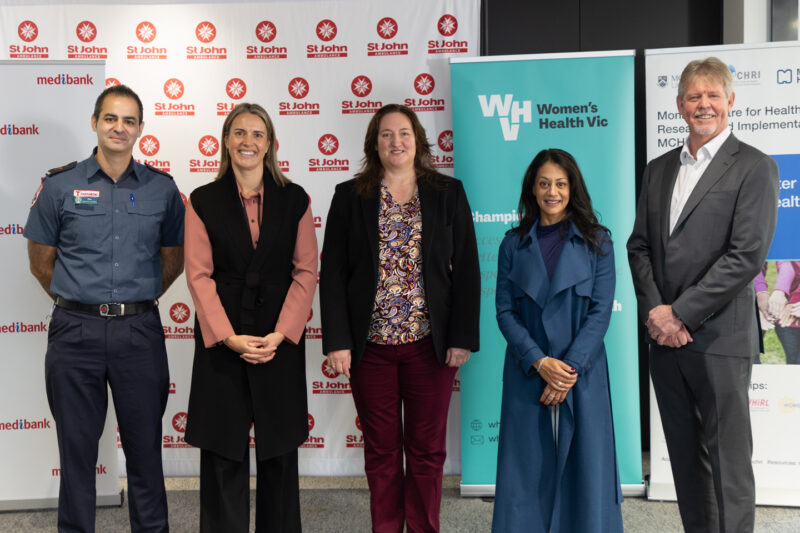
“Knowing this, Women’s Health Victoria is proud to be working with Ambulance Victoria, St John Ambulance Victoria, Monash University, and Medibank on three new initiatives to save lives,” she said.
Ambulance Victoria Paramedic and Director of the Centre for Research and Evaluation A/Professor Ziad Nehme said paramedics attended more than 36,000 out-of-hospital cardiac arrests from 2020 to 2024.
“Only one in 10 Victorians survive an out-of-hospital cardiac arrest, but Ambulance Victoria data show community education about the importance of CPR leads to earlier intervention by bystanders, which we know has a marked impact on cardiac arrest survival,” A/Professor Nehme said.
“Victoria’s internationally comparable witnessed cardiac arrest survival rate (Utstein) has risen to 44.4 per cent, a nation-leading figure and second only to Denmark (50.2 per cent) worldwide.
“When a patient receives early bystander intervention through CPR and shocks from a defibrillator before paramedics arrive, their chances of survival more than double.
“Ambulance Victoria data shows that in the five years from 2020 to 2024 the percentage of cases with a shockable rhythm was almost twice as high for men (13.1%) compared with women (6.8%),” he said.
“Men are also three times more likely to receive defibrillation than women. This may be because men are more likely to experience cardiac arrest in a public place and that can significantly increase their chance of survival, but we also know that bystanders can be hesitant to help when the patient is a woman.
“What this data makes visible is that women and men are not equally likely to receive bystander CPR or defibrillation, and that’s something these initiatives need to address,” A/Professor Nehme said.
St John Ambulance Victoria Chief Executive Officer Gordon Botwright said building skills and confidence to act is one of the most powerful ways to save lives in the critical minutes before paramedics arrive.
“We are working with Women’s Health Victoria to examine and update CPR training so it explicitly addresses sex‑based barriers, normalises appropriate CPR on women and girls, and builds skills and confidence for bystanders to act without delay,” Mr Botwright said.
“This is about gender‑responsive training that reflects real bodies and real emergencies, so everyone has the best possible chance of survival.”
Monash University’s Monash Centre for Health Research and Implementation Professor Cassandra Szoeke said there is also a clear need for better education for health professionals on sex differences in cardiovascular risk, symptoms, investigation and management to avoid cardiac arrest.
“We are building Australia’s first sex‑specific, co‑designed cardiovascular professional develop program to equip clinicians with evidence‑based training to better recognise, investigate and manage heart disease in women,” Professor Szoeke said.
“The project will develop a practical, accredited learning module that will support clinicians to identify female‑specific cardiovascular risks and common presentations, and to apply sex‑specific prevention and management.
“It’s not just theoretical, as the module will focus on real‑world decisions – what to look for, what to test, when to refer – and will be designed for immediate practical clinical application.
“The new national sex-specific education program with the highest levels of evidence will upskill Australian health professionals, improving health outcomes for women, thanks to funding from the Medibank Better Health Research Hub and the real world experiences of clinicians and women. It will be linked to the Australian Medical Association (AMA) CPD Program,” she said.
Medibank Group Medical Director Dr Shona Sundaraj said closing the knowledge and confidence gap can save lives.
“It’s 2026, and heart disease in women in Australia is still not adequately recognised or diagnosed,” Dr Sundaraj said.
“During my GP training, differences in how men and women present with heart disease was not part of the conversation. It’s only once you start practising that it becomes clear that women can experience cardiac issues in many different and often overlooked ways.
“Medibank is proud to support Australia’s first cardiovascular education module focused specifically on women.
“Good heart health is not just about lifestyle choices. It also comes from regular heart checks and early intervention from health professionals who understand what to look for – regardless of your sex or gender,” she said.
Ms Hasler said Women’s Health Victoria was proud to partner with Ambulance Victoria, St John Ambulance Victoria, the Monash University Centre for Health Research and Implementation, and Medibank to embark on the three projects to address sex and gender in one of Australia’s leading causes of death.
“A cardiac arrest can happen to anybody at any time.
“These partnerships mean that at every point Victorians will be better equipped to intervene and ensure we don’t miss a beat when it comes to women’s heart health,” she said.